
Menu
 EUR
-
EUR(€)
-
 AUD(A$)
-
 GBP(£)
-
 USD($)
EUR
EUR(€)
AUD(A$)
GBP(£)
USD($)
A cigarette is usually smoked in about 10 to 15 puffs over 5 to 8 minutes, and a smoker takes in roughly 1 mg of nicotine from it. There is no fixed number of puffs on a 5% vape that equals one cigarette, because the nicotine you get from each puff depends on your device, its power setting, the e-liquid and how long you draw. What you can work out is how much nicotine is in your pod and how fast you use it up, and that gives a much more useful comparison than a puff count.
Is one puff of a vape equal to one cigarette? No. A single vape puff delivers far less nicotine than a whole cigarette, which is inhaled over 10 to 15 puffs across several minutes. Comparing one vape puff to one cigarette isn't a fair measure, since a cigarette's roughly 1 mg nicotine dose is spread across its entire smoking session, not delivered in one draw. A more accurate comparison looks at total nicotine intake over a day, not puff-for-puff.
This guide explains the numbers behind both products, shows how to compare a pod with your old cigarette habit, and covers what makes one puff stronger than another. It is written for adult vapers 21 and over.
Most smokers take 10 to 15 puffs per cigarette and finish it in 5 to 8 minutes. Nicotine researchers at UCSF cite that figure in a 2016 study that also measured how e-cigarette users puff: vape puffs tend to be longer (about 3.5 seconds on average in their study) and are spread out across the day instead of being packed into a few minutes.
So the two habits don't line up neatly. A smoker gets a cigarette's worth of nicotine in one short burst. A vaper usually takes a few puffs at a time, many times a day, from a device that never "runs out" after 15 puffs. This is also why comparing a single puff to a single cigarette doesn't hold up: the dosing patterns are fundamentally different.
The strength on an e-liquid label tells you how much nicotine is in the liquid. A 5% vape has 50 mg of nicotine per milliliter, so a 2 ml pod filled with 5% e-liquid holds 100 mg, and a 3 ml pod holds 150 mg. A 2% (20 mg/ml) liquid puts 40 mg in the same 2 ml pod.
That is the nicotine content of the e-liquid, not the amount you take in. Some of each puff is exhaled and some liquid is never vaporized, so you can't divide 100 mg by 1 mg and call a pod "100 cigarettes." Cigarettes work the same way: the National Cancer Institute's monograph on smoking points out that what a cigarette delivers is not the same as the nicotine in its tobacco, and estimates the delivered dose at about 1 mg per cigarette, with a range of 0.37 to 1.6 mg (NCI Smoking and Tobacco Control Monograph No. 7).
|
Cigarette |
5% pod vape |
|
|---|---|---|
|
Puffs per use |
About 10–15 per cigarette |
No set number; most people take a few puffs at a time |
|
Time per use |
About 5–8 minutes |
Spread across the day |
|
Nicotine you can read off the pack or label |
Tobacco content (not the same as what you take in) |
50 mg/ml, so 100 mg in a 2 ml pod or 150 mg in a 3 ml pod |
|
Nicotine actually taken in |
About 1 mg per cigarette on average (NCI estimate) |
Varies with device, power, puff length and nicotine type |
|
What changes your intake |
How deeply and how often you puff |
Device type, wattage, e-liquid strength, puff length, how often you vape |
Online charts that say a pod equals a pack, or that 20 puffs equal a cigarette, are guesses built on one device and one way of vaping. Change the device or the person and the answer changes. A more reliable way is to track your own vaping:
That gives you a daily figure for your own device and habits, which is more useful than any fixed puffs-per-cigarette ratio.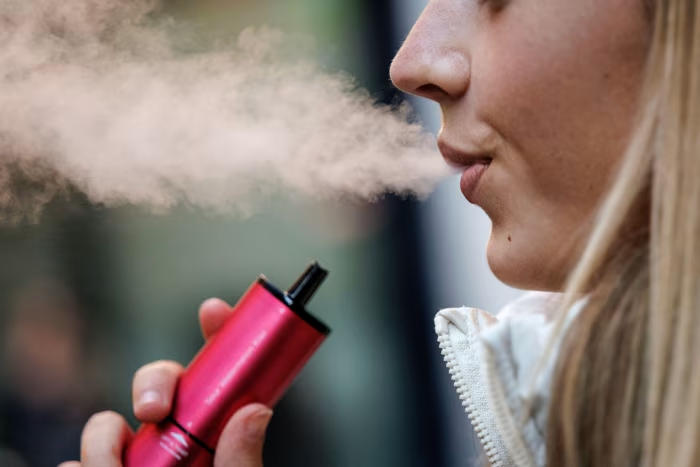
Low-power pod-based systems vaporize a small amount of liquid per puff, so they are paired with stronger e-liquids such as 2% to 5% nic salts. People using high-wattage mods with sub-ohm tanks vaporize far more liquid per puff, which is why sub-ohm e-liquids are usually only 3 to 6 mg/ml. A 5% liquid in a sub-ohm tank would deliver a very harsh, very strong hit.
A longer, deeper draw pulls more vapor through the coil. Taking puffs back to back, known as chain vaping, adds up quickly too. Two people with the same pod can get through it at very different speeds.
Nicotine salts feel smoother at high strength than freebase nicotine, so most 5% liquids are salts made for pod devices.
PG and VG carry the nicotine and flavor in your e-liquids. Higher-PG liquids give a stronger throat hit and suit tight mouth-to-lung pods; higher-VG liquids are smoother and suit sub-ohm tanks. The ratio changes how the hit feels even when the nicotine number is the same.
5% is the highest strength most pod vapes are sold with in the US. It is made for small mouth-to-lung pods with a tight, slow draw. If 5% feels too strong, 2% to 3.5% salts or a 6 to 12 mg/ml freebase liquid may suit you better. Lower strengths, including zero nicotine, are easy to find.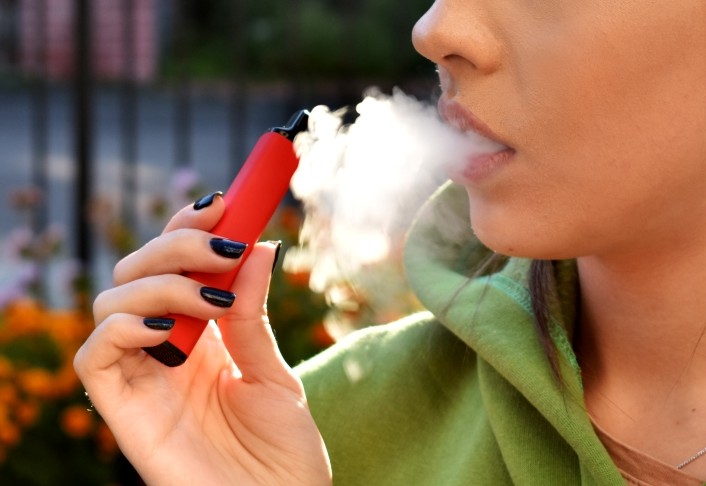
No. A cigarette delivers its roughly 1 mg nicotine dose across 10 to 15 puffs over several minutes, while a single vape puff delivers only a small fraction of that amount. Comparing vaping and smoking puff-for-puff doesn't reflect how nicotine intake actually works; comparing total daily nicotine intake is more accurate.
There's no fixed number. It depends on the device, the power setting, the e-liquid strength and how long each puff is. Compare by pod instead: note how long a pod lasts you and how many cigarettes you used to smoke in that time.
Usually 10 to 15 puffs, taken over 5 to 8 minutes.
50 mg per milliliter. A 2 ml pod holds 100 mg and a 3 ml pod holds 150 mg. That is the content of the liquid, not the amount you take in.
It is the top end of what most US pod liquids offer. It suits some heavier smokers using low-power pods, but many vapers are comfortable at 2% to 3.5% or lower. If you feel lightheaded or queasy, step down a strength.
It isn't recommended. Sub-ohm tanks vaporize much more liquid per puff, so they are designed for 3 to 6 mg/ml liquids. Keep 5% salts for low-power pod devices.
You must be 18 years or older to browse this website.
This product contains nicotine, which is an addictive chemical.