
Menu
 EUR
-
EUR(€)
-
 AUD(A$)
-
 GBP(£)
-
 USD($)
EUR
EUR(€)
AUD(A$)
GBP(£)
USD($)
TL;DR: Vaping tricks like smoke rings, ghost inhales, and tornados rely on vapor density, mouth shape, and controlled exhales. Adult vapers (21+) can build these skills with higher-VG e-liquids, adjustable-airflow devices, and regular practice in a still, draft-free space. This guide covers techniques, equipment — including vape pens and disposable vapes — and safety considerations, per CDC guidance (CDC, 2025).
Before anything else: vaping tricks are for adults who already vape, not an invitation for youth or non-users to start. The CDC states plainly that there are no safe tobacco products, including e-cigarettes, and that e-cigarettes should not be used by youth, young adults, or pregnant women (CDC, updated January 31, 2025). Adults who have never smoked or used tobacco products shouldn't start either. Most e-cigarettes contain nicotine, which is addictive, and no e-cigarette has been approved by the FDA as a smoking cessation aid.
With that out of the way, vaping tricks have become a genuine subculture within vape communities. Enthusiasts share videos of smoke rings, ghost inhales, and tornado effects, turning a simple exhale into something closer to performance art. For adult vapers who already use e-cigarettes, learning these tricks can be an enjoyable way to build hand-eye-mouth coordination (yes, that's a thing), connect with other hobbyists, and pass the time during a vape session.
This guide walks through the most popular tricks, from the beginner-friendly smoke ring to more advanced moves like the ghost inhale and waterfall. It also covers equipment considerations across vape brands and device types, practice habits, and safety guidelines so you can approach the hobby responsibly.
A vaping trick is a technique for shaping or manipulating exhaled vapor into a visual effect — a ring, a wave, or a cascading "waterfall." Vapers learn these tricks for the same reasons people learn to juggle or do card flourishes: it's a skill that rewards patience, and it's fun to show off once you've got it down. None of these tricks require inhaling more deeply than you normally would. They involve holding vapor in your mouth and controlling how it exits, not pulling it further into your lungs.
The smoke ring is the foundational trick, and almost every other trick builds on it.
Step-by-step technique:
Common beginner mistakes
Tips for consistency and ring size
Practicing in front of a mirror helps you see exactly what your mouth is doing and correct small errors in real time. Smaller, tighter "O" shapes tend to produce smaller, more stable rings, while a wider opening combined with a stronger throat push can create bigger (though often less stable) rings. Consistency comes from repeating the same lip shape and throat motion every time, so your muscles learn the pattern.
Once the smoke ring feels natural, a handful of advanced tricks build on the same fundamentals.
Ghost inhale
The ghost inhale involves pushing out a solid ball of vapor, then quickly inhaling it back before it dissipates. The "ghost" effect comes from the puff appearing to float, then vanish as it's sucked back in.
Tornado
The tornado trick turns a pushed-out ball of vapor into a spinning funnel. After exhaling a dense puff onto a flat surface (like a table), a flat hand motion above the vapor creates a rotating, rising column.
Waterfall and French inhale
The waterfall effect uses a device designed to let vapor spill downward in a cascading sheet. The French inhale, meanwhile, involves exhaling vapor from the mouth and then inhaling it through the nose, creating a flowing, waterfall-like visual between the nose and mouth.
Each of these tricks depends heavily on vapor density and a controlled, practiced exhale, so it's worth mastering the smoke ring fully before moving on.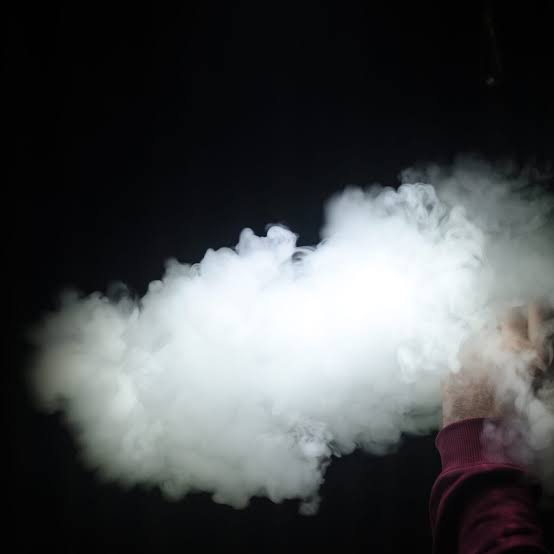
Equipment plays a real role in how well tricks turn out, though no specific vape brand or device guarantees results. Traditional refillable devices generally give trick-focused vapers more control than a disposable vape, since airflow, wattage, and e-liquid can all be adjusted to suit the trick you're working on.
Device considerations
If you're shopping for a device, a reputable vape store can walk you through which vape pens or refillable kits suit trick practice best, since not every model on the shelf is built with adjustable airflow in mind.
E-liquid viscosity and VG/PG ratios
E-liquids are generally a blend of vegetable glycerin (VG) and propylene glycol (PG). Higher-VG liquids tend to produce thicker, denser vapor that holds its shape better, which is why many trick-focused vapers favor VG-heavy blends. PG-heavy liquids tend to produce a stronger throat hit and thinner vapor, which is better suited to flavor-focused vaping than trick performance.
Environmental factors
Smoke rings and other tricks hold together best in still, calm air. A draft from a window, fan, or air conditioning vent will break apart a ring before it has a chance to form. Slightly humid indoor air can also help vapor hold its shape a bit longer than very dry air.
Because most e-liquids contain nicotine, and nicotine is addictive, more practice time generally means more nicotine exposure if you're using a nicotine-containing e-liquid. One practical option: use a nicotine-free e-liquid specifically for practice sessions, reserving your regular e-liquid for normal use. This lets you repeat the physical technique as many times as needed without increasing your nicotine intake.
Building a practice routine
Connecting with the vaping community
Many vape forums and online communities share trick videos and feedback. Watching how other adult vapers execute a technique, and getting pointers on your own attempts, can speed up the learning curve considerably.
This hobby comes with the same health considerations as vaping generally. The CDC's position is unambiguous: there are no safe tobacco products, including e-cigarettes, and no e-cigarette has been approved by the FDA as a smoking cessation aid (CDC, updated January 31, 2025). Vaping tricks don't change that underlying risk profile — they're a way adult vapers interact with vapor they're already producing, not a reason to vape more or differently.
A few practical guidelines:
Vaping tricks reward patience more than natural talent. The smoke ring is the technique that unlocks everything else — ghost inhales, tornados, waterfalls — so it's worth spending real time on the fundamentals: puff, hold, shape your "O," and push from your throat rather than your cheeks. Equipment matters too; a device with adjustable airflow and a higher-VG e-liquid will make the learning curve noticeably smoother than relying on a basic disposable vape.
If you're already an adult vaper looking to develop this skill, consider practicing with nicotine-free e-liquid to limit your nicotine exposure, and lean on vape communities and forums for feedback as you refine your technique. And if you're not already a vaper, this is a hobby to admire from a distance, not a reason to start.
Is vaping or blowing vape tricks safe?
No tobacco product, including e-cigarettes, is considered safe by the CDC (CDC, updated January 31, 2025). Vaping tricks don't add extra risk beyond typical vaping, but they don't reduce it either.
Do I need a special device to do vape tricks?
Not necessarily, but devices with adjustable airflow, sub-ohm tanks, and higher wattage tend to produce denser vapor clouds that are easier to shape into tricks.
What VG/PG ratio is best for vape tricks?
Higher-VG e-liquids (vegetable glycerin) generally produce thicker, denser vapor that holds its shape longer, which is why many trick enthusiasts prefer VG-heavy blends over PG-heavy ones.
Can I practice vape tricks without increasing my nicotine intake?
Yes. Using a nicotine-free e-liquid for practice sessions lets you repeat the technique as often as you like without added nicotine exposure.
Who shouldn't try vaping tricks?
Vaping tricks are for adults 21 and older who already vape. The CDC advises against e-cigarette use for youth, young adults, pregnant women, and adults who have never used tobacco products (CDC, updated January 31, 2025).
You must be 18 years or older to browse this website.
This product contains nicotine, which is an addictive chemical.